Thrilled to share our latest publication! By studying newly described fossil fin material from the same Arctic deposits that produced Tiktaalik, we uncovered evidence for previously unknown anatomical diversity among finned tetrapodomorphs. It’s a reminder that even isolated bones can reveal new chapters in the story of how vertebrates made the transition from water to land.
New pectoral fin material from the Late Devonian of Ellesmere Island, Nunavut, Canada and diversity
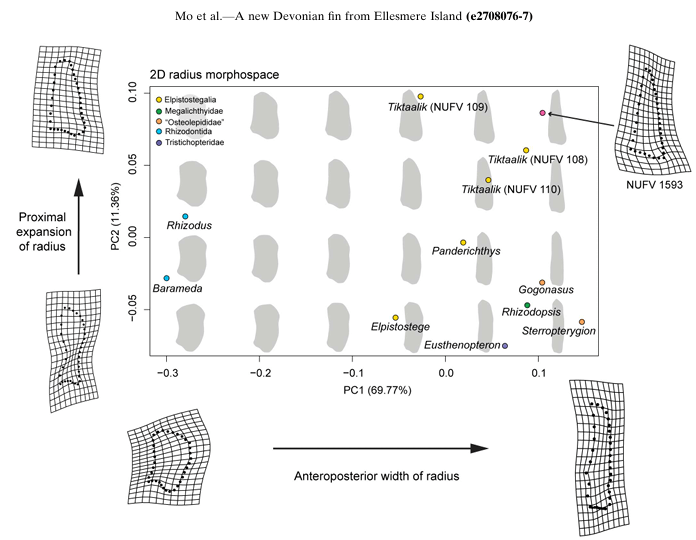
A snapshot of evolutionary diversity (above). This morphospace analysis compares the shape of the radius across fossil tetrapodomorph fishes. The newly described Ellesmere Island specimen (NUFV 1593) exhibits a distinctive combination of features, suggesting previously unrecognized diversity among the fishes most closely related to the earliest limbed vertebrates.
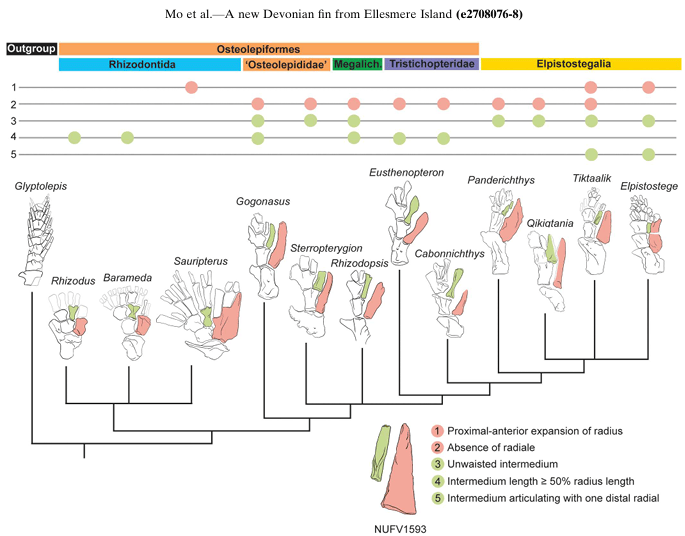
A diversity of designs before the origin of limbs (below). Long before vertebrates walked on land, evolution was already tinkering with a wide range of fin anatomies. This comparison of pectoral fin skeletons shows how the newly described Ellesmere Island specimen (NUFV 1593) combines features in a way not currently known from other described taxa, providing new insight into the diversity of fishes living near the dawn of the fin-to-limb transition.


You must be logged in to post a comment.